






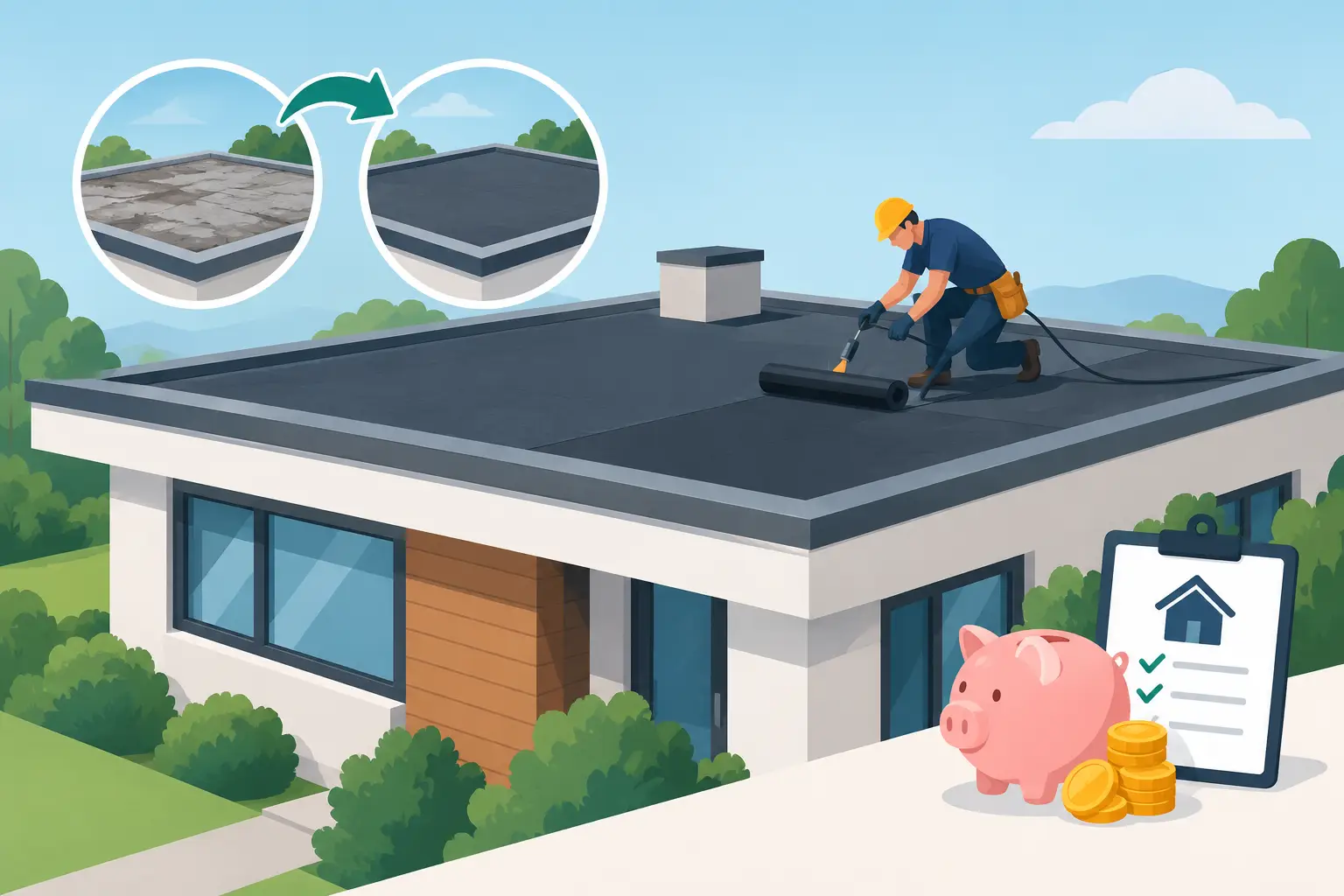
A flat roof can look perfectly serviceable from ground level while moisture is already working its way beneath the covering. That is why flat roof replacement cost should be considered alongside the roof’s condition, drainage and the protection it provides to the rooms below - not simply as a price per square metre.
For homeowners, landlords and property managers across the South East, replacing a failing flat roof is often a chance to stop repeat repairs, improve insulation and protect the property from more expensive water damage. The right solution depends on the roof itself, so a trustworthy quotation should explain what is included and why.
What does flat roof replacement cost in the UK?
As a broad guide, a small flat roof replacement such as a garage, porch or bay window roof may cost from around £1,500 to £3,000. A typical residential extension roof of roughly 15 to 25 square metres may fall between £3,000 and £7,500. Larger roofs, difficult access, extensive timber repairs or more complex details can take the investment beyond this range.
These figures are useful for initial budgeting, but they are not a substitute for a proper site survey. A roof with a straightforward shape, sound decking and easy access will naturally cost less than one with hidden rot, several rooflights, awkward scaffolding requirements or poor drainage.
The most helpful question is not simply, “What is the cheapest covering?” It is, “What work will give this roof the dependable service life and weather protection the property needs?” A lower initial figure can prove costly if it leaves defective structure, inadequate falls or weak edge details in place.
What a proper replacement quotation should include
A full flat roof replacement is more than laying a new waterproof surface over the old one. In some situations, an overlay can be appropriate, but only after the existing roof has been assessed for trapped moisture, stability and compatibility with the proposed system.
A detailed quotation should set out whether the existing covering will be removed, how the roof deck will be inspected and repaired, and what insulation will be fitted. It should also cover the waterproofing system, flashings, trims, drainage outlets and safe disposal of waste. Access equipment, scaffolding and VAT should be made clear from the outset.
Where the roof is above a heated room, replacement work may also need to address current insulation standards. This can increase the upfront cost, particularly if the roof build-up must be altered, but it can reduce heat loss and condensation risk over the years ahead.
Be cautious of a quote that gives one total with no explanation of materials, preparation or guarantees. Clear scope is part of professional workmanship. It helps you compare like for like and prevents essential items becoming unexpected extras once work has begun.
The factors that change the final price
Roof size matters, but it is only one part of the calculation. Labour, preparation and detailing often have as much influence on the final figure as the visible roof area.
The chosen roofing material is a key consideration. Modern felt systems can be a practical and cost-effective choice when installed correctly. EPDM rubber is valued for its flexibility and clean appearance, particularly on uncomplicated roofs. GRP fibreglass forms a hard, seamless finish and can work well where durability and a neat edge detail are priorities. Liquid-applied systems can be useful around complicated shapes, penetrations and junctions.
Each system has strengths and limitations. For example, a material that is very suitable for a simple garage roof may not be the best choice around multiple rooflights, pipes or abutments. The expected use of the roof matters too. A roof intended for regular foot traffic needs a suitable specification rather than a standard domestic finish.
The condition of the timber deck can also affect flat roof replacement cost significantly. If water has entered over time, sections of decking, joists or fascias may need repair or replacement. A responsible contractor should identify visible concerns during the survey, while also explaining that concealed deterioration can only be confirmed when the old covering is removed.
Drainage deserves close attention. Flat roofs are built with a controlled fall to guide water towards outlets or gutters. Standing water after rainfall may point to poor falls, blocked outlets or local deflection in the structure. Simply applying a new surface without resolving the reason water is collecting can shorten the life of the replacement roof.
Access is another practical factor. A rear extension with straightforward side access is very different from a roof above a town-centre property, a high-level terrace or a home where materials must be carried through the building. Scaffolding, lifting arrangements and the time needed to work safely all form part of a realistic price.
Replacement or repair: how to make the right call
Not every leak means a full replacement is necessary. A local split, failed flashing or damaged outlet may be repaired successfully where the roof covering is otherwise in good condition. Timely repairs can be an effective way to protect a roof and postpone a larger project.
Replacement becomes the more sensible option when repairs are becoming frequent, the covering is nearing the end of its serviceable life, water is affecting the deck, or previous patching has created a weak and uneven surface. If insulation upgrades and drainage corrections are also needed, addressing everything in one planned project can offer better long-term value than repeated call-outs.
A professional inspection should give you an honest assessment of both routes. The aim is not to recommend replacement automatically, but to provide enough evidence for a confident decision. Photographs of defects, clear explanation of the proposed work and a written specification all help homeowners understand what they are paying for.
How to compare flat roof quotes fairly
When comparing quotations, focus on the scope before the headline total. Ask whether each contractor is removing the old roof, what insulation depth is included, which waterproofing system is proposed and how details around walls, doors, rooflights and outlets will be finished.
It is also sensible to confirm the expected duration of the work, arrangements for protecting the property from weather during replacement, and the workmanship and material guarantees available. A clear answer is reassuring, particularly when the roof protects occupied rooms or a rental property.
There is value in choosing a contractor that can show completed work similar to your own project. Project photographs, customer feedback and a clear local presence provide useful reassurance, but they should sit alongside a thorough survey and a specification suited to your property.
Planning a replacement without unwelcome surprises
The best time to plan a flat roof replacement is before a small defect becomes internal damage. Look out for blistering, cracking, lifted edges, moss around drainage points, staining on ceilings, sagging areas or water that remains on the roof long after rain. These signs do not always mean immediate failure, but they are worth assessing promptly.
If you are arranging work, move furniture and valuables away from the affected area where possible, and discuss access, parking and working hours before the start date. A well-managed contractor will explain how the property will be protected, how waste will be removed and what happens if poor weather interrupts the programme.
Revive Roofing Solutions approaches flat roof work with the wider condition of the property in mind. The objective is a durable roof that manages rainwater properly, protects the structure below and gives you confidence when the weather turns.
A flat roof is a relatively small part of a property, but when it fails, the effects can spread quickly. Investing in a clear survey and a properly specified replacement gives you a stronger basis for protecting your home for years to come.