












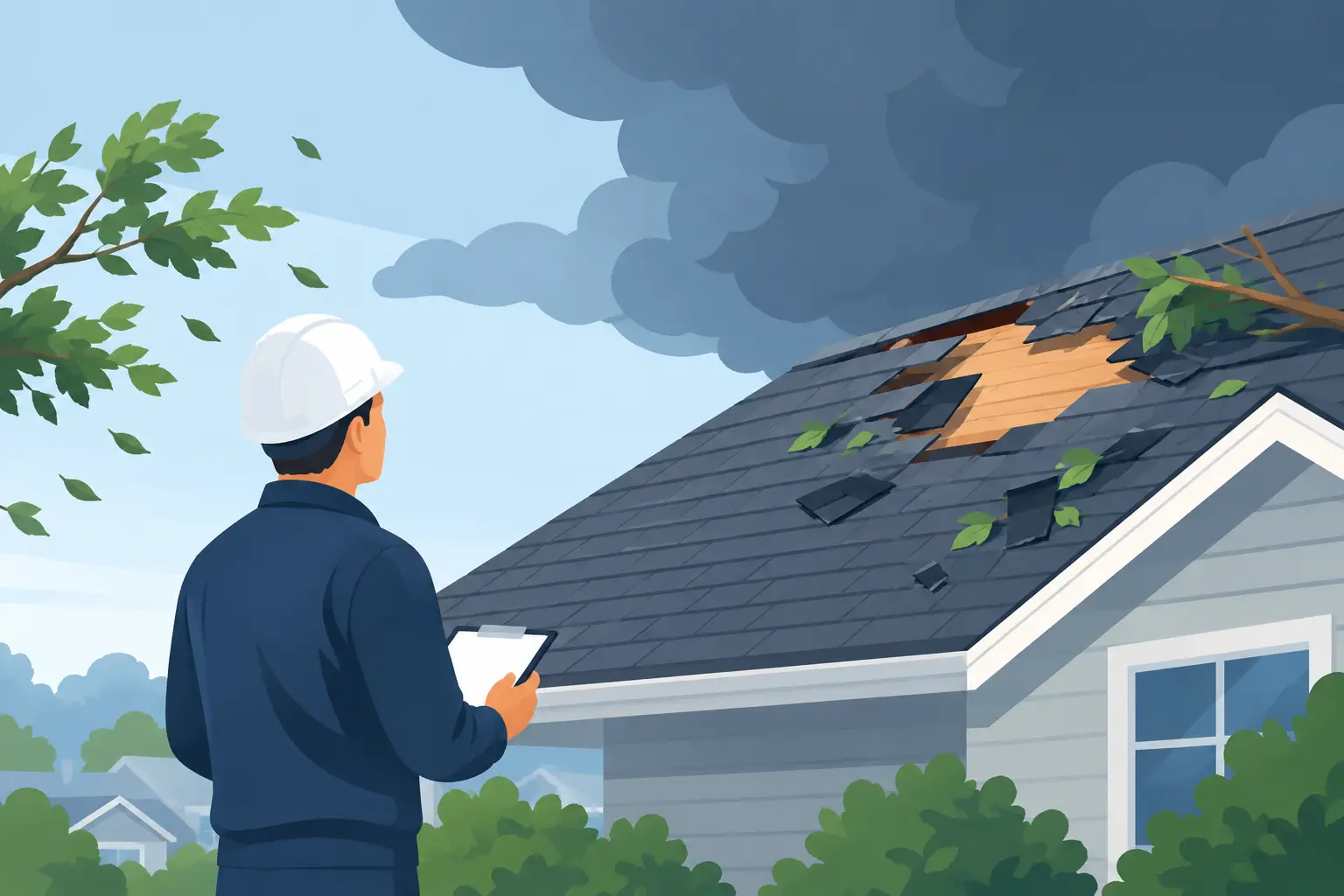
A single slipped tile can admit far more water than most homeowners expect. After high winds and heavy rain, the visible damage is not always the full story: water may already be tracking beneath tiles, through felt or along roof timbers. Emergency roof repair after storm damage is about making the property safe, stopping further water entry and establishing exactly what has failed before a smaller problem becomes a costly internal repair.
Put safety before a temporary repair
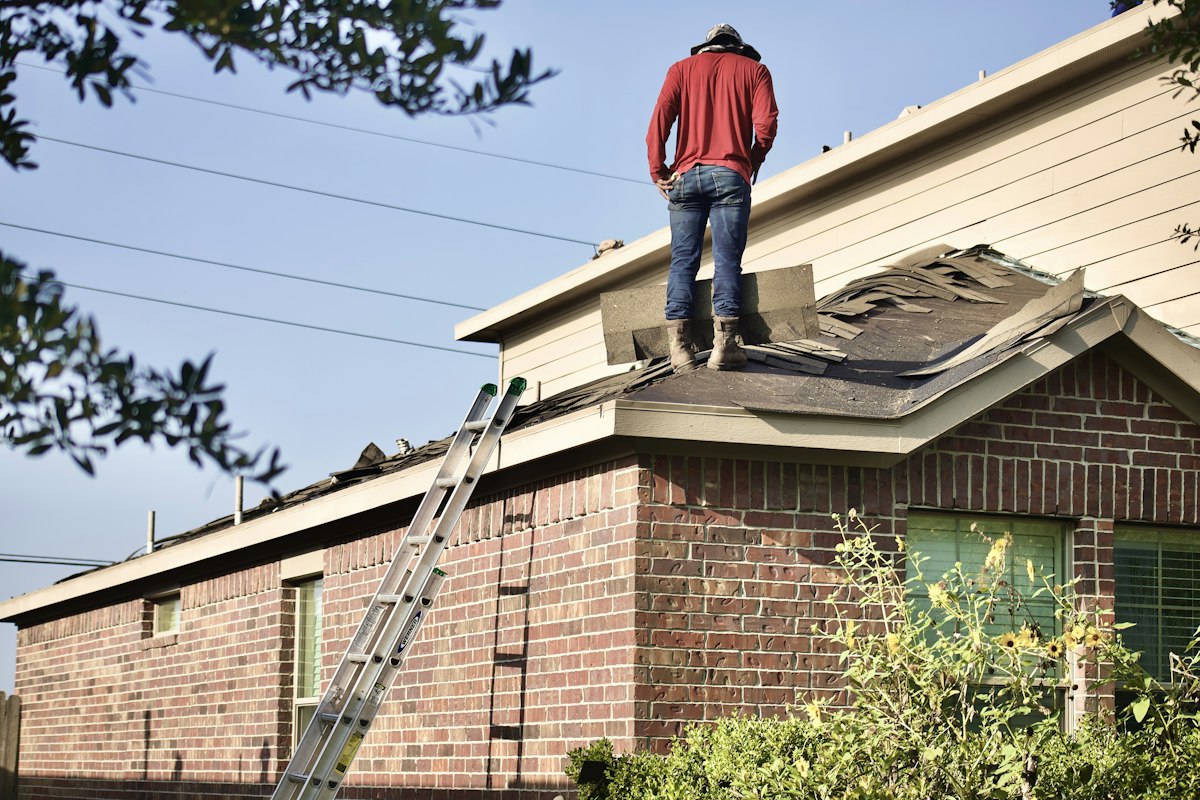
It is understandable to want to inspect the roof as soon as the weather clears. However, a roof that has been exposed to wind, rain and falling debris can be unstable. Wet tiles are slippery, loose materials can shift without warning, and electrical hazards may be present where water has entered the property.
Do not climb onto the roof, lean a ladder against damaged guttering, or attempt to retrieve tiles from a roof slope. Stay clear of fallen cables and keep children and pets away from damaged areas. If a large branch, chimney stack or section of roofing has collapsed, restrict access to the affected part of the home and contact the relevant emergency services where there is an immediate danger to people or neighbouring property.
From ground level, look for obvious signs such as missing or lifted tiles, displaced flashing, damaged ridge tiles, blocked gutters, loose fascias, broken rooflight panes or debris around the property. Photographs taken safely from the ground can be useful for an insurer and for the roofing contractor assessing the situation.
Limit water damage inside the property
The first priority indoors is to protect people, electrics and vulnerable belongings. Move furniture, rugs and electrical items away from the leak if it is safe to do so. Place buckets or waterproof containers under active drips, and use towels to contain spreading water. If a ceiling is bulging, do not puncture it or stand directly beneath it. Water trapped above a ceiling can be heavy, and the structure may fail unexpectedly.
If water is close to light fittings, sockets or electrical appliances, switch off power to the affected circuit only if you can do so without entering a wet or hazardous area. When there is any doubt, leave the electrical supply alone and seek advice from a qualified electrician.
Opening internal doors and allowing airflow can help reduce condensation and damp, but avoid using heaters directly against wet plasterboard, timber or carpets. Fast, intense drying can cause cracking or distortion. Once the roof has been made watertight, controlled drying and a proper check for damp will give a better result.
What a professional emergency roof repair involves
A proper emergency response is not simply a sheet of tarpaulin over the problem. Temporary weather protection can be essential, particularly when more rain is expected, but it should be installed securely and followed by a careful inspection. An unsecured cover can tear loose in the wind, damage the roof further or create a risk for neighbours.
A roofer will normally assess the roof covering, ridge and verge details, valleys, flashings, gutters and downpipes. They will also consider whether the storm has exposed an existing weakness. For example, several missing tiles may point to failed fixings, while water around a chimney can be caused by damaged lead flashing rather than the tiles themselves.
Where it is safe to do so, the contractor may carry out an immediate repair such as replacing slipped or broken tiles, securing loose ridge tiles, refixing flashing, clearing a blocked rainwater route or providing a temporary weatherproof covering. The exact approach depends on the roof type, the extent of the damage and whether materials can be safely matched and installed in the conditions.
For flat roofs, pooling water, split felt, lifted edge trims and damaged seams need particular attention. For pitched roofs, the condition of the underlay and battens may need checking once the outer covering is opened up. A visible repair can be quick, but durable protection relies on fixing the cause, not just covering the symptom.
When a temporary repair is the right choice
There are times when a permanent repair cannot sensibly be completed on the first visit. Persistent rain, strong winds, limited access, specialist materials or extensive damage may make a full repair unsafe or impractical. In those circumstances, a professionally fitted temporary solution protects the property while a planned repair is arranged.
That is not a lesser standard of service. It is often the responsible choice. Rushing permanent work in unsafe weather can compromise workmanship and create further risk. What matters is clear communication about what has been protected, what remains vulnerable and when the lasting repair can be completed.
A written explanation should set out the condition found, the emergency work undertaken and any recommended follow-up work. This helps homeowners make an informed decision and gives landlords or managing agents a useful record of the property’s condition.
Record the damage for your insurer
Before damaged materials are removed, take clear photographs and short videos from safe positions. Capture the wider roof area where possible, close views of water staining or ceiling damage, and any debris that may have caused the problem. Make a note of the date, the weather conditions and when you first noticed the issue.
Contact your insurer promptly if you intend to make a claim. Most policies expect reasonable steps to prevent further damage, which is why emergency weatherproofing is usually sensible. Keep invoices and reports for any call-out, temporary protection, drying work and permanent repair.
Avoid authorising broad replacement work until you understand the scope, unless urgent action is required to keep the property safe and dry. A reliable contractor should be able to distinguish between immediate protection and recommended longer-term work, without pressuring you into a decision while you are dealing with the stress of a leak.
Signs that storm damage may be more serious
Some problems are obvious straight away, but others emerge over the following days. Check loft spaces carefully from a safe, well-lit position for damp insulation, darkened timbers, drips, daylight showing through the roof covering or a musty smell. Do not walk across ceiling joists or disturb wet insulation unnecessarily.
Inside the home, watch for new brown staining, peeling paint, bubbling plaster, mould growth or a ceiling that feels soft to the touch. These signs do not always identify the precise entry point, because water can travel some distance along rafters or membranes before it becomes visible.
Chimney movement, cracked mortar, loose leadwork and damaged gutter brackets also deserve prompt attention. A roof can appear intact while rainwater is being directed behind the fascia or down an external wall. Left untreated, this may affect roof timbers, insulation and internal finishes.
Choosing the right contractor after a storm
Storm conditions can attract rushed decisions. Choose a roofing specialist that can explain the findings in plain English, provide a clear scope of work and show evidence of completed projects and customer feedback. Ask whether the work is a temporary measure or a permanent repair, what materials will be used and whether related details such as flashing, underlay or guttering have been checked.
Be cautious of anyone who offers an instant diagnosis without a proper inspection, demands full payment before work begins or suggests extensive replacement without explaining the evidence. Price matters, but the cheapest emergency option can become expensive if water continues to enter around an incomplete repair.
For homeowners across the South East, Revive Roofing Solutions approaches urgent roof damage with the focus it requires: protecting the property first, assessing the cause carefully and recommending work designed to last.
Preventing the next weather-related emergency
No roof is entirely immune to severe weather, but routine maintenance can reduce the chance of a sudden leak. Keep gutters and valleys clear, especially after autumn leaf fall. Arrange inspections where tiles are ageing, mortar is cracking or previous repairs are beginning to deteriorate. Trees close to the property should also be managed so that branches do not rub against the roof or fall during high winds.
After emergency repairs are complete, do not treat the absence of a drip as the end of the matter. A timely professional inspection can confirm that the roof is dry, secure and ready for the next spell of difficult weather, giving you confidence that your home remains properly protected.