








Water marks on the ceiling near a chimney breast, damp patches in the loft or a drip that appears only after heavy rain often point to one vulnerable area: the flashing where the chimney meets the roof. Chimney flashing repair cost varies because the visible defect is not always the full story. A small failed seal can be a straightforward repair, while lifted leadwork, damaged mortar or a deteriorating chimney stack may need more involved work to protect the property properly.
For most homeowners, the priority is not simply finding the lowest figure. It is understanding what needs repairing, why it has failed and whether the proposed work will keep water out through the seasons ahead.
Typical chimney flashing repair cost in the UK
As a broad guide, a minor repair to chimney flashing may cost around £200 to £400. This could include resealing a small gap, securing a loose section of flashing or renewing a limited area of pointing around the lead.
Where lead flashing needs lifting and refitting, a larger section requires replacing, or there is more than one point of water entry, costs commonly sit between £350 and £750. Partial replacement of flashing around a chimney can range from £700 to £1,400, depending on the roof and access.
A full renewal using correctly formed lead flashing may cost from roughly £1,000 to £2,500 or more. This is more likely where old flashing has reached the end of its useful life, the chimney has several junctions, or work is needed to both the front and back of the stack. Scaffolding, repairs to the chimney brickwork and a high or difficult roof can increase the final price.
These figures are useful starting points rather than fixed prices. A proper inspection is the only reliable way to establish the scope of work, particularly when a leak has been present for some time.
What affects the cost of chimney flashing repairs?
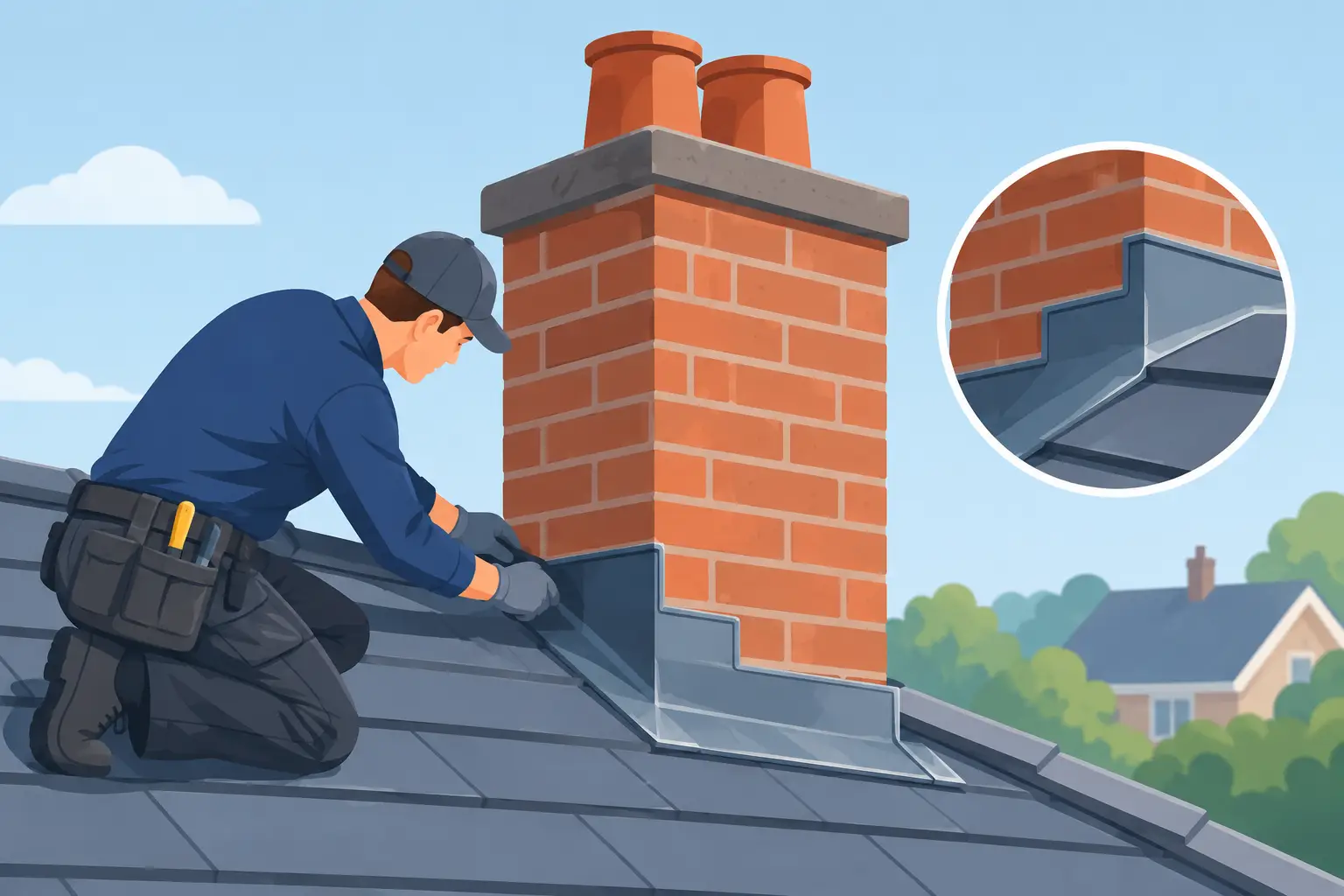
Flashing is the weatherproof junction between the chimney and roof covering. It is often made from lead because lead can be shaped around the chimney and has a long service life when installed correctly. Some roofs may have alternative materials, but the principle is the same: rainwater must be directed safely onto the roof rather than allowed behind the tiles or slates.
The extent of the damage
A split in sealant is not the same as failed step flashing or a lead apron that has pulled away from the masonry. Minor faults may be repaired locally. However, patching lead that is badly cracked, poorly detailed or worn thin can prove false economy. In those cases, replacing the affected section is usually the more durable option.
A roofer should also identify whether the flashing is the true source of the leak. Water can travel beneath tiles, along roof timbers and around chimney masonry before showing itself indoors. What looks like a flashing issue from inside may be caused by broken tiles, defective pointing, a damaged flue cowl or a problem higher up the roof.
Roof height and access
Safe access has a direct effect on chimney flashing repair cost. A bungalow with a clear, low roofline is generally quicker to work on than a three-storey property, a steep pitched roof or a chimney positioned near the ridge.
For some minor work, suitable roof access equipment may be enough. For larger repairs, extensive replacement or chimneys at height, scaffolding is often the safest and most appropriate option. Although this raises the quote, it allows the repair to be completed carefully rather than rushed from unsafe access.
The roof covering and chimney design
Slate roofs, clay tiles, concrete tiles and flat roof junctions each require a different approach. Slate can require careful lifting and reinstatement to avoid breakages. Older roofs may also have fragile materials or details that need extra care.
Chimneys with wide stacks, decorative brickwork, multiple flues, valleys or awkward abutments take longer to flash correctly. The number of lead details matters too. Apron flashing at the front, soakers or step flashing at the sides, and back gutters behind the chimney all play a part in keeping the junction watertight.
Related chimney repairs
Water entering around a chimney is often linked to deteriorating mortar joints, cracked render, spalled bricks or failed flaunching around chimney pots. If these issues are left unresolved, new flashing alone may not deliver the protection the roof needs.
It can be sensible to combine related work while safe access is already in place. Repointing a chimney stack or replacing damaged bricks will add to the initial cost, but may prevent another visit and reduce the risk of ongoing damp damage.
When a repair is enough and when replacement makes sense
The right solution depends on condition, not just age. Sound lead flashing with a local opening at the edge may only need careful refixing and sealing. Similarly, a small amount of failed mortar in a chase - the channel where lead is set into the chimney brickwork - can sometimes be renewed without replacing all the lead.
Replacement is usually the better choice if the lead is split in several places, has been patched repeatedly, is lifting away from the roof, or was installed with poor laps and inadequate allowance for movement. Lead expands and contracts with temperature changes. If it has been fixed too rigidly or detailed incorrectly, it may crack or pull free over time.
A good repair should deal with the cause of failure, not simply cover the symptoms. That may mean renewing the lead, securing it into the masonry correctly, dressing it to shed water and ensuring adjoining roof tiles or slates are properly reinstated.
Signs you should arrange an inspection promptly
A chimney leak rarely improves without attention. It may seem minor during a dry spell, then become more obvious after prolonged rain and wind. Early action can limit damage to insulation, rafters, ceilings and internal finishes.
Arrange a professional inspection if you notice damp around the chimney breast, discoloured ceilings in rooms below the roof, water in the loft, loose or visibly lifted flashing, crumbling mortar around the chimney, or moss and debris building up behind the stack. A musty smell in the loft can also indicate that moisture has been entering for longer than expected.
Do not rely on adding sealant from ground level or attempting a repair from a ladder. Chimney work is high-level work, and surface sealant may hide rather than resolve a defect. A clear assessment of the leadwork, roof covering and chimney masonry provides a safer basis for deciding what is needed.
What should a clear quotation include?
A useful quotation should explain the repair in plain English. It should identify whether the work involves local sealing, refixing, partial replacement or full renewal of the flashing, along with any associated chimney or roof repairs.
It should also make clear how access will be provided, whether scaffolding is included, what materials will be used and how surrounding tiles or slates will be protected and reinstated. If a contractor finds additional damage once the work is opened up, they should explain the issue and discuss the options before proceeding.
Be cautious of a quote that gives only a single figure with no description of the work. Cheaper proposals can sometimes cover a temporary mastic application rather than a properly formed flashing repair. The lower upfront cost may be appealing, but recurring leaks can lead to higher expense and disruption later.
Protecting your property for the long term
Chimneys are exposed above the roofline and take the full force of wind-driven rain. Checking the flashing and masonry as part of regular roof maintenance is one of the most practical ways to prevent small defects becoming internal damage.
If you are concerned about a leak, a professional inspection gives you the facts needed to act with confidence. Revive Roofing Solutions can assess the chimney, roof junction and surrounding materials, then recommend work that is proportionate to the condition of your property. A well-executed repair should leave you with more than a dry patch for now - it should provide dependable weather protection when the next period of heavy rain arrives.